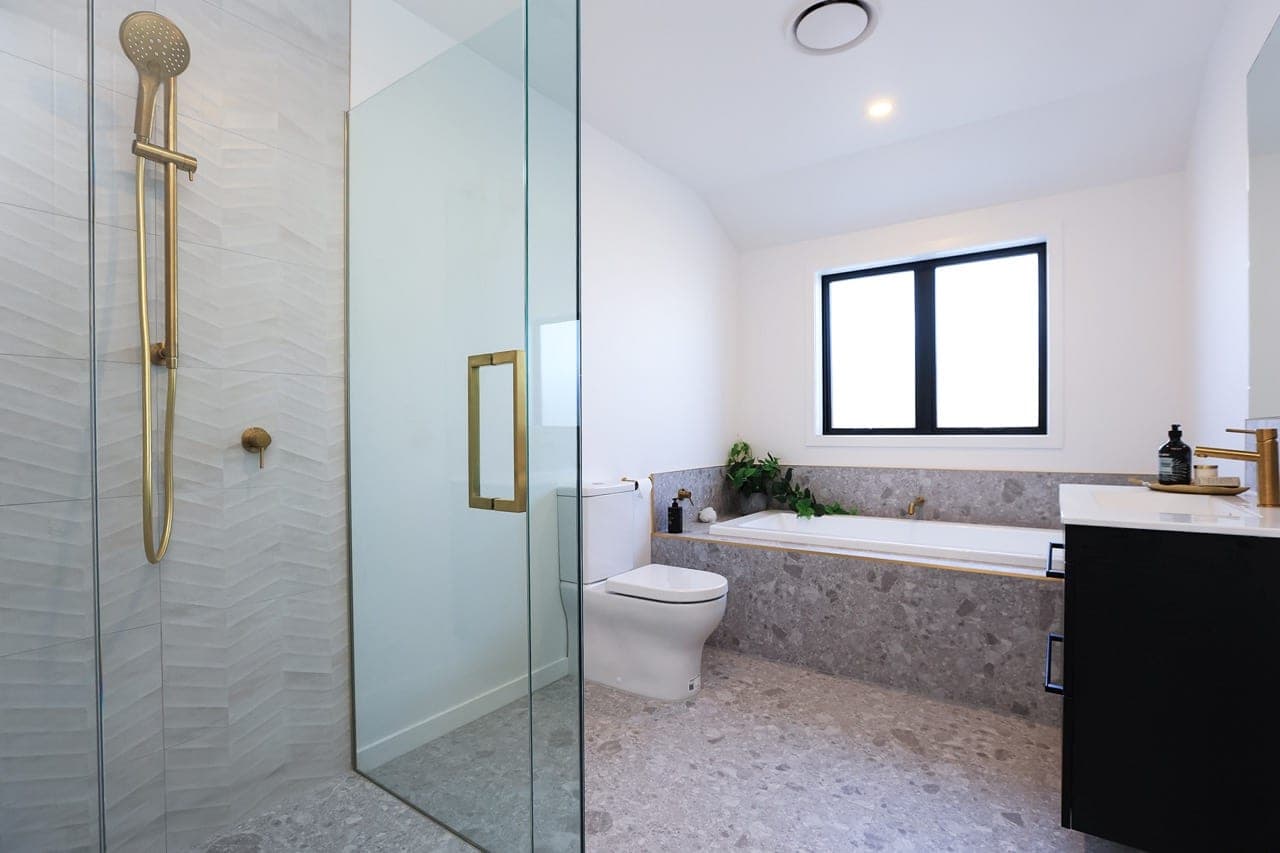
Knocking down and rebuilding tends to make more financial and practical sense than renovating once a Hawke's Bay home needs significant structural, foundation, insulation, wiring or weathertightness work — at that point you're often paying near-new-build money to patch up an old structure, when a fixed-price rebuild gets you a code-compliant home with a 10-year Master Build guarantee for a comparable spend. A straightforward cosmetic renovation — kitchen, bathroom, paint, flooring — usually stays the cheaper option when a home's bones are genuinely sound. Here's how to work out which side of that line your home sits on, and what a knockdown/rebuild actually involves in Hastings and Napier.
When renovating is the better call
If the structure, foundations, roof and weathertightness are all in good order, and you're mainly unhappy with finishes, layout or the number of bedrooms, a renovation is usually the more cost-effective path. Kitchens, bathrooms, cladding refreshes and even moderate reconfigurations can transform how a home feels without the cost and disruption of starting from scratch. The key test is whether the money you'd spend is going toward genuine improvement, or toward propping up problems that will resurface in five years anyway.
When knockdown and rebuild wins
The economics tip toward rebuilding once a home needs several of the following at once: foundation repair or re-piling, a full re-clad for weathertightness, an insulation and wiring upgrade throughout, or seismic strengthening. Individually, any one of these can be manageable within a renovation budget. Stacked together, they routinely approach — or exceed — what it costs to demolish and build new, without ever delivering a home that performs to a current Building Code standard or carries a 10-year guarantee. If your section also happens to be larger than you need, subdividing before or alongside a rebuild can offset some of that cost.
What a knockdown/rebuild actually involves
Demolishing an existing home is a managed process, not just a digger turning up: services (power, water, wastewater, gas, telecommunications) need to be safely disconnected first, a demolition consent is required from council, and any hazardous materials such as asbestos need to be identified and removed by a licensed contractor before work starts. From there it runs much like any new build — design, fixed-price contract, building consent and construction — just starting from a cleared site instead of bare land. Our subdivide & rebuild service covers the full process, including where most clients live during construction.
Subdividing instead of — or as well as — rebuilding
If your section is genuinely bigger than you need, subdividing off part of it is worth investigating whether or not you rebuild. Minimum lot sizes, frontage and access rules vary by zone under both the Hastings and Napier district plans, so the first real step is confirming what your specific property allows. Depending on the result, a subdivided lot might carry one new home or two — something we assess with you before any design work starts. We've written up the whole process step by step in our guide to subdividing a section in Hawke's Bay.
Get an honest read on your specific home
General guidance only gets you so far — the right call depends on your actual home, section and budget. Send us the address and we'll give you a straight answer on whether renovating, rebuilding or subdividing makes the most sense, the same way we would for any client walking through our door. As Registered Master Builders with more than 20 years building in Hawke's Bay, we'd rather you get the right advice before you commit than after.
Thinking of building?
Talk it through with a local Master Builder.
Honest, obligation-free advice on sections, designs and budgets — from a team that’s built across Hawke’s Bay for more than 15 years.
Start the conversation